Surface Evaluation
We assess the concrete for moisture, existing coatings, surface damage, and anything that would affect adhesion or the final appearance of the flake system.
Forge Concrete Surfaces installs professional epoxy and polyaspartic floor coating systems for homeowners across Chester and Montgomery County. If you've been searching for epoxy, there's a good chance polyaspartic is the better choice — and we'll explain why.
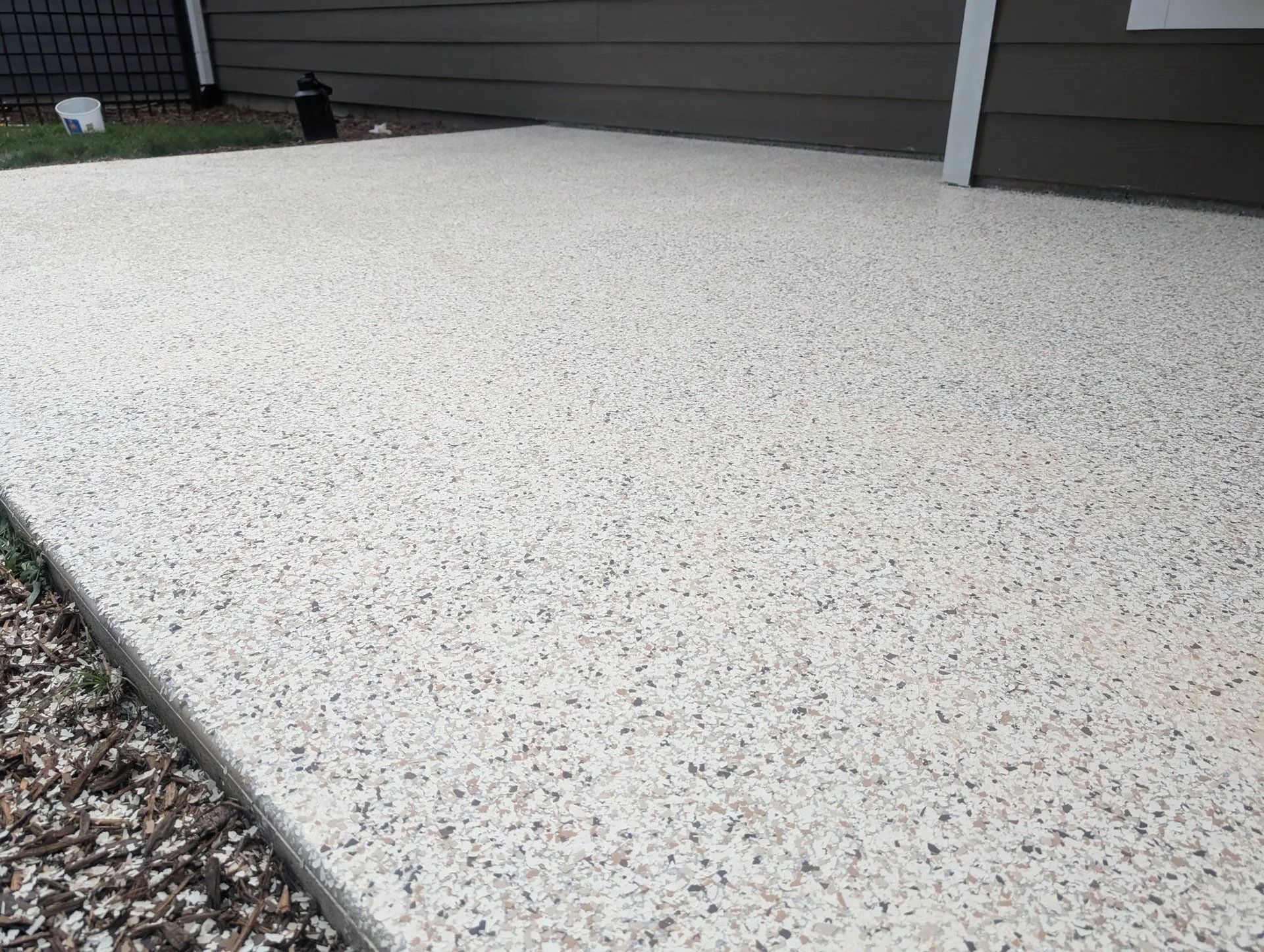
Most homeowners searching for epoxy floor coating are really searching for a durable, attractive concrete coating system — and epoxy is just the term they know. Epoxy has been the standard for decades, and it does work. But the industry has moved, and the products available today outperform traditional epoxy in almost every measurable way.
At Forge Concrete Surfaces, we install both epoxy-based and polyaspartic coating systems, and we'll be straight with you about which one makes more sense for your project. For most residential applications in Phoenixville, Wayne, Malvern, and West Chester — garages, basements, utility spaces — polyaspartic is the right call. It cures faster, handles UV exposure without yellowing, and is more resistant to the hot tire pickup and chemical exposure that ends epoxy floors early. On this page, we break down both options so you can make an informed decision before we even arrive for your estimate.
Homeowners typically come to us asking about:
Both are concrete coating systems. Here's where they part ways.
Traditional epoxy can take 24–72 hours to cure between coats and several days before vehicle traffic. Polyaspartic cures significantly faster — most residential jobs are done in a day and ready for vehicles within 24 hours.
Epoxy yellows and chalks with UV exposure — a serious problem for garages with windows, exterior spaces, or anywhere sunlight reaches. Polyaspartic is 100% UV-stable and maintains its color and clarity for years.
Hot tires pulling into a freshly parked car can lift epoxy coatings off the concrete — a common failure mode called hot tire pickup. Polyaspartic handles thermal shock significantly better.
Epoxy has a narrow application temperature window and doesn't perform well in cold or humid conditions. Polyaspartic can be applied across a wider range of temperatures, making it more practical for Pennsylvania's variable spring and fall weather.
Epoxy is still used as a primer layer in many professional coating systems and works well in certain high-build industrial applications. For residential projects, we use epoxy components where they make technical sense — not because it's all we have.
We install the right system for each project — here's what that typically looks like.
Our most popular residential system. A polyaspartic base coat, full vinyl flake broadcast, and a clear polyaspartic topcoat. Durable, UV-stable, and available in dozens of flake color blends. Completed in one day for most residential projects.
A clean, single-color system using a polyaspartic base and topcoat. Works well in basements, utility spaces, and garages where a uniform look is preferred over the flake finish.
A hybrid system that uses an epoxy primer layer for its adhesion and moisture-blocking properties, topped with a polyaspartic finish coat for UV stability and durability. The best of both chemistries in one system.
For homeowners who want a high-gloss metallic or decorative epoxy finish, we install these systems with a UV-stable polyaspartic topcoat to extend the life and prevent yellowing.
Our project gallery includes epoxy and polyaspartic floor coating installations completed in Phoenixville and surrounding communities across Chester and Montgomery County. These are real residential projects — garages, basements, and utility spaces — not renders.
These projects show the finished result of professionally installed coating systems compared to what most homeowners have seen from DIY kits or budget contractors.
The process is the same regardless of which system you choose — preparation is what determines whether a coating lasts or fails.
We assess the concrete for moisture, existing coatings, surface damage, and anything that would affect adhesion or the final appearance of the flake system.
The entire surface is mechanically ground to open the concrete pores, remove any previous coatings or contamination, and create the surface profile necessary for proper bonding.
Cracks, chips, and surface damage are repaired and smoothed before any coating is applied. The flake layer will cover minor variations, but the surface needs to be structurally sound.
A penetrating primer coat is applied to seal the concrete and establish the chemical bond for the base coat above.
The polyaspartic base coat is applied evenly across the surface. Color selection happens at this stage — the base coat color influences how the final flake blend reads.
Vinyl flakes are broadcast into the wet base coat — full or partial coverage depending on the selected system. Excess flakes are swept up after the base coat cures.
A clear polyaspartic topcoat is applied over the flake layer to seal the surface, lock in the flakes, and deliver the final sheen — matte, satin, or high-gloss depending on the homeowner's preference.
Forge Concrete Surfaces installs epoxy and polyaspartic floor coating systems throughout Chester County and Montgomery County, including:
If your home is nearby, contact us to discuss your project.
The most common causes are inadequate surface preparation and the use of water-based epoxy products. DIY kits and budget contractors frequently skip mechanical grinding — the step that actually opens the concrete pores for proper adhesion. Without it, the coating bonds to the surface layer of the concrete rather than penetrating it, and that bond fails over time from thermal cycling, moisture, and traffic.
For most residential applications, yes — and the price difference between a professional epoxy system and a professional polyaspartic system is smaller than most homeowners expect. The performance gap in UV stability, cure time, and hot tire resistance is significant, and you're not going to redo the floor in three years because it yellowed.
You can buy DIY kits, and some homeowners do. The results are almost universally underwhelming after 12–24 months. The products available at hardware stores are water-based formulas with a fraction of the solids content of professional systems, and they're applied without the surface preparation that makes coatings last. We'd rather give you a straight answer than watch you spend money on something you'll want redone.
A properly installed polyaspartic system in a residential garage typically lasts 15–20 years. The variables are traffic intensity, whether the surface was properly prepared, and whether the topcoat was a true UV-stable polyaspartic or a lesser product. We use 100% solids professional-grade systems — not what you find in a big-box store.
We stand behind our installations. Warranty specifics depend on the system installed and the surface conditions — we'll discuss this during the estimate. What we won't do is overpromise a warranty on a surface that has conditions that could compromise the coating, and then leave you with a problem later.
That's what the estimate is for. We look at the space, assess the concrete, understand how you use it, and give you a straight recommendation — not a sales pitch for the most expensive option. If a basic sealer is all you need, we'll tell you. If your basement moisture levels require a specific primer system, we'll explain why before you commit to anything.
Forge Concrete Surfaces installs professional floor coating systems for homeowners throughout Chester and Montgomery County. Contact us to schedule your free on-site estimate.
All Rights Reserved | Forge Concrete Surfaces LLC
Website by Quantum Hawk